Sunday, December 11, 2011

CRONOS (1993)

On the seventeenth Lynchian day of Christmas, we present acclaimed Mexican director Guillermo Del Toro's first feature film Cronos (1993). Set during Christmastime through New Year's Eve, an aging antiques dealer discovers a device that grants its user immortality at a terrible cost. The Lynchian blend of comedy and drama mixed with his own unique blend of fantasy and horror set apart Del Toro's movies from any other. This signature mixture of genres is again seen in his popular Hellboy (2004) franchise and was perfected later in the Academy Award nominated Pan's Labyrinth (2006).

Saturday, December 10, 2011

THE CONVERSATION (1974)

We've Met Before, Haven't We?
On the sixteenth Lynchian day of Christmas, we present Francis Ford Coppola's thoughtful thriller-character study hybrid The Conversation (1974). Shot during the Christmas season in the mild climate of San Francisco, The Conversation is the most Hitchcockian and Lynchian film in Coppola's body of work. The film centers on Harry Caul (Gene Hackman), a professional eavesdropper who wrestles with guilt and paranoia because of his morally dubious line of work. Caul becomes caught in a lurid web of deceit and guilt, unsure of his employer's motivations when asked to record the conversations of a young couple.

Friday, December 9, 2011

ENEMY OF THE STATE (1998)

On the fifteenth Lynchian day of Christmas, we present Tony Scott's action thriller Enemy of the State (1998). Although this hyperbolic, big-budget blockbuster shares little in common tonally or stylistically with Lynch's films, its plot about a conspiracy disintegrating a man's reputation, finances, and personal life to coerce him into doing a mysterious villain's bidding is Lynchian. We can see parallels with Will Smith's Robert Dean and the young director Adam Kesher in Mulholland Dr. (2001). Enemy of the State also pays homage to Francis Ford Coppola's even Lynchier film The Conversation (1974).

Thursday, December 8, 2011

PSYCHO (1960)

On the fourteenth Lynchian day of Christmas, we present Alfred Hitchcock's classic thriller Psycho (1960). Although not normally thought of as a Christmas movie, Psycho features holiday decorations in the background during an early scene at the bank where Marion works. And since the entire film takes place within a week or so of that scene, we can assume the story takes place around Christmastime. Partly obscuring the film's Winter time frame is its setting in the Southwestern United States—the action taking place between Phoenix and Southern California—where the temperate weather conditions result in a conspicuous lack of snow.

Wednesday, December 7, 2011

THE WAR OF THE ROSES (1989)

Once in a Lifetime Comes a Motion Picture that Makes You Feel Like
Falling in Love All Over Again.... This is Not that Movie
On the thirteenth Lynchian day of Christmas, we present Danny DeVito's horrifyingly funny black comedy on marriage and divorce The War of the Roses (1989).  In his strongest directorial feat to date, Danny DeVito humorously channels a Hitchcockian film style to create the ultimate comedy of horrors. And like David Lynch, Danny DeVito seems far more influenced by director Alfred Hitchcock's thrillers set inside the home than by his international spy thrillers for which he was also known. The War of the Roses is one of the most unique films of this genre, being equally disturbing and funny from beginning to end.

Tuesday, December 6, 2011

A CHRISTMAS CAROL (2009)

On the twelfth Lynchian day of Christmas, we present Robert Zemeckis's big budget 3-D motion capture Disney adaptation of Charles Dickens's classic A Christmas Carol (2009). David Lynch's contemplative approach to film feels at home with Dickens's style of writing, something hinted at in the Dickensian The Elephant Man (1980). And Dickens's novella A Christmas Carol is probably his most Lynchian work. For instance, the novella plays on Ebenezer Scrooge's uncertainty about whether he is dreaming or in fact receiving angelic visitors that Christmas Eve—like the literal angels at the end of Lynch's Twin Peaks: Fire Walk with Me (1992). And like many of Lynch's films, A Christmas Carol centers on a character wrestling with guilt as he confronts his own horrifying reality.

Monday, December 5, 2011

THE SECRET DIARY OF LAURA PALMER

The New Edition of the Book Contains
 a New Forward by Frost and Lynch
Tomorrow a new edition of Jennifer Lynch's The Secret Diary of Laura Palmer is being published. At the height of Twin Peaks' popularity at the end of the first season, series creators Mark Frost and David Lynch commissioned Lynch's daughter Jennifer to write a media tie-in novel The Secret Diary of Laura Palmer (1990). Laura's secret diary would be introduced early in the show's second season with the arrival of Harold Smith—Laura's reclusive shut-in friend and confidant, who Donna Hayward would later find while exploring Laura's old Meals on Wheels route.

THE HUDSUCKER PROXY (1994)

At Hudsucker Industries There's a Fast Way to the Top...
And an Even Faster Way Down
On the eleventh Lynchian day of Christmas, we present Joel and Ethan Coen's send-up to 30's, 40's, and 50's screwball comedies The Hudsucker Proxy (1994). Set in December of 1958, no sooner does Hudsucker Industries achieve the pinnacle of success when its CEO inexplicably throws himself out the window in the middle of a board meeting. The board of directors, led by classic actor Paul Newman, search for a puppet CEO to place in charge of the company. They ultimately choose a young business school graduate played by Tim Robbins, who turns out to be a smarter, more talented and independent than the board originally thought. With some parallels to today's social conflicts over the role of corporations, the movie follows this Christmastime power struggle to its ultimate and zany conclusion.

Sunday, December 4, 2011

EASTERN PROMISES (2007)

Every Sin Leaves a Mark
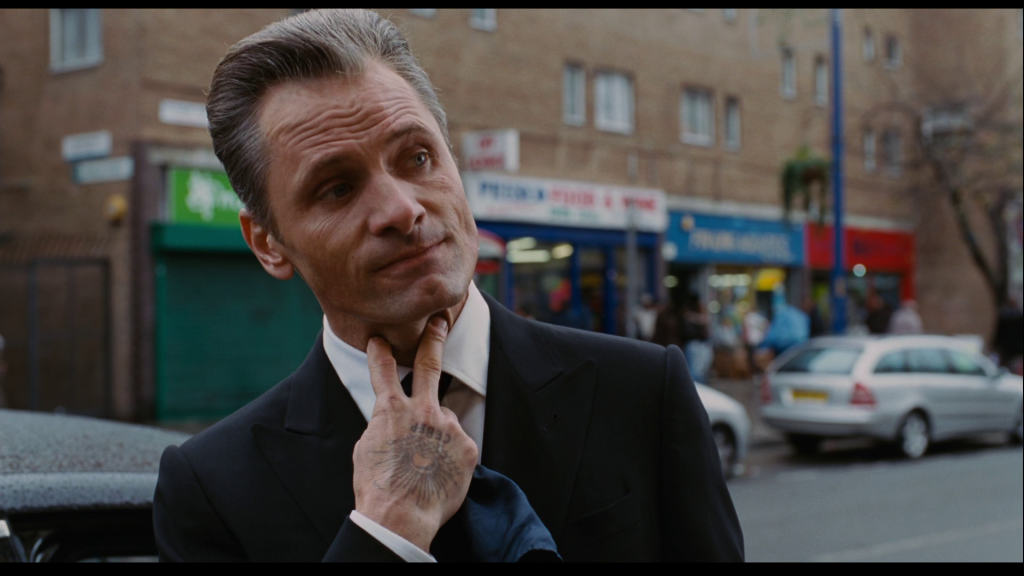
On the tenth Lynchian day of Christmas, we present David Cronenberg's thrilling mafia drama Eastern Promises (2007). Set during Christmastime in modern-day London, Eastern Promises follows a midwife (Naomi Watts) investigating a Russian teen immigrant who died in childbirth. As the midwife unlocks the young woman's identity and a way to contact her family in Russia, the midwife becomes acquainted with a helpful Russian restaurant owner (Armin Mueller Stahl) and his driver (Viggo Mortensen). She soon finds herself getting pulled deeper and deeper into the dangerous mysteries surrounding the young woman's pregnancy.

Saturday, December 3, 2011

THE SHINING (1980)

A Dream of Dark and Troubling Things... In Winter
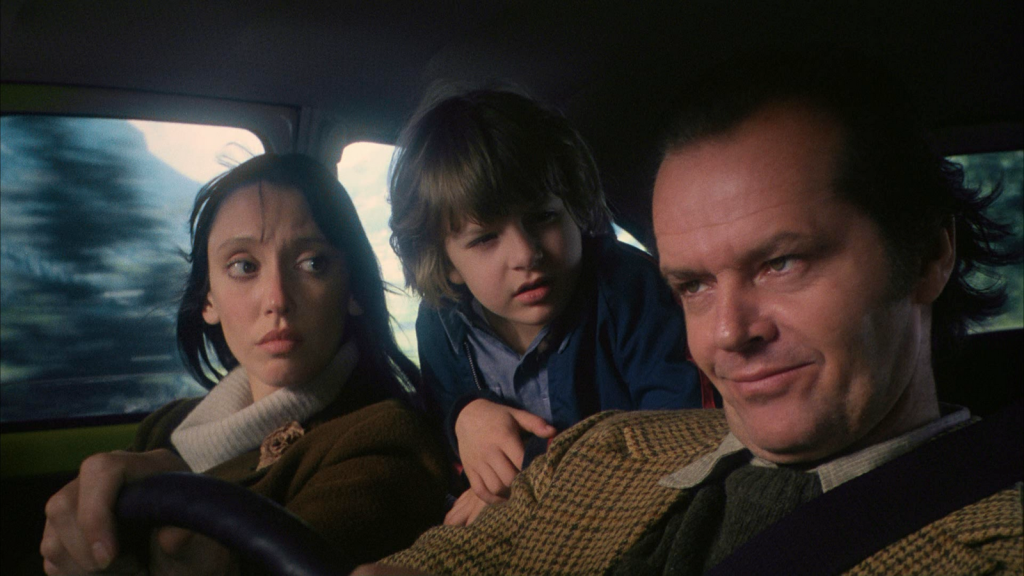
On the ninth Lynchian day of Christmas, we present Stanley Kubrick's perfect winter horror film The Shining (1980). Routinely listed as the best and scariest film ever made, The Shining was meticulously crafted by the ultimate film perfectionist, Kubrick. And as we mention in greater detail in our article for Eraserhead (1977), Kubrick actually screened David Lynch's first feature film for the cast of The Shining to help the actors establish the proper mood and tone.

Friday, December 2, 2011

THE ROYAL TENENBAUMS (2001)

Family is Not a Word... It's a Sentence
On the eighth Lynchian day of Christmas, we present Wes Anderson's absurdly funny family dramedy The Royal Tenenbaums (2001). Set during Winter in a New York created specifically for the film from Anderson's childhood perceptions, we follow the long-term exploits of the Tenenbaum family. The Royal Tenenbaums expresses Lynch's comedic style and possesses subtle Lynchian allusions. For instance, the family's name is a derivation of the word tananbaum, which is German for "Fir Tree" or "Christmas Tree."

Thursday, December 1, 2011

THE APARTMENT (1960)

There is No Such Thing as a Bad Coincidence...
On the seventh Lynchian day of Christmas, we present Billy Wilder's somber romantic drama The Apartment (1960). The film takes place mostly between Christmas and New Year's Eve, and is frequently listed as one of David Lynch's favorite films. The Apartment also has the distinction of being the last of Lynch's seven film selections to screen at his Parisian nightclub Club Silencio its opening week, which you can learn more about here. Interestingly, Lynch bookended his week-long festivities with two Billy Wilder films, having screened Sunset Blvd. (1950) the opening night.